4 Steps for Approaching Data Integration Successfully – Part 1: The Right Team


In our introductory installment, we introduced the concept of respecting data integration as a strategic factor of operational excellence. Let’s dive into the first, and arguably the most difficult component of that strategy: putting together the right team.
The truth is, getting the right people involved at the right time and in the right way can feel like a nearly impossible challenge for any organization-wide project. There are so many factors working against your priorities and best intentions, such as:
However, if these were really insurmountable challenges, no nonprofit organization would ever succeed at anything! So, let’s look at why so many for-profit businesses use what’s known as a RACI matrix to tackle the problem of collaboration.
Better integration leads to better data. Dive into our expert-led session on crafting the perfect integration strategy: Best Practices for Building a Nonprofit Integration Strategy.
A RACI matrix is an organizational tool that ensures you have the right people involved at the right time and in the right way. Sound familiar? Down the rows, you list the key tasks in your project. Across the columns, you list the key people who may be even remotely involved in any of those tasks along the way. Then, you fill in the intersecting cells with each person’s RACI role:
Here’s an example of a task from a special event project: manually entering registrants into your software.
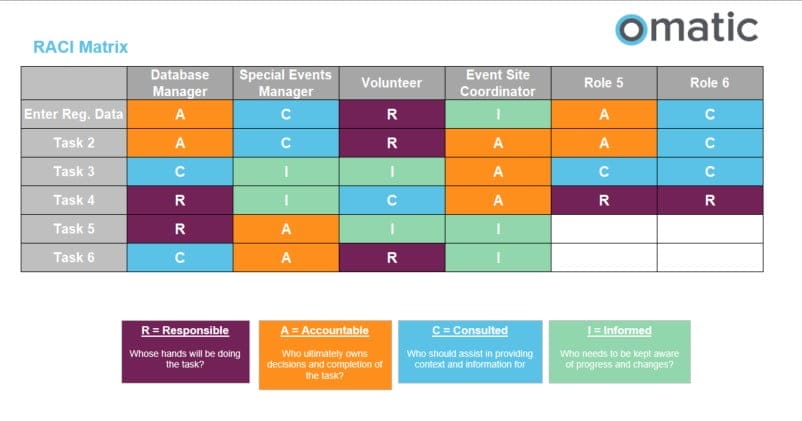
One person may serve multiple roles on a single task, and that’s okay! It’s also okay for multiple people to serve in the same role on a task. For example, both the Special Events Manager and the Event Site Coordinator may need to be informed of changes.
What’s more important is making sure that every task has at least one person responsible for actually doing it. Without that, it may never get done.
Challenge: In the image above, which task is at risk of not being completed?
Here’s what we love about a RACI matrix—it curbs egos. By agreeing as a team to give this method a try on even just one project, you’re giving yourselves the peace of mind that someone will own these different tasks.
Completing the matrix together facilitates productive conversation and ensures buy-in from everyone involved. This level of transparency also promotes getting stuff done! If you know you’re going to go to a check-in meeting with your name next to an incomplete task, it may be a good motivator to make the time to finish it. It also allows team members to hold each other accountable for making progress. At the very least, it enables discussion about whether to reassign a task to someone else.
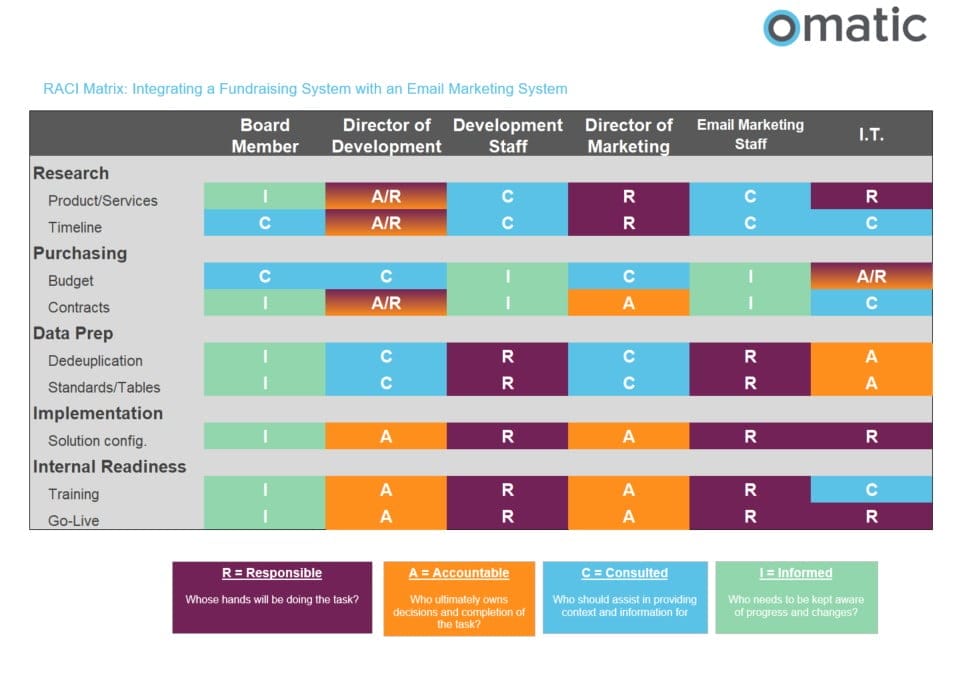
The example we’ve created below focuses on integrating a fundraising system with an email marketing system, and it provides a good starting point for thinking through your own organization’s needs. Don’t worry, you can download our template down below.
Who else would be involved if we were talking about integrating alumni relations data, or volunteers, or gift shop?
When thinking about data integration as a strategic part of your operations, the natural first thought is, ‘What software options are out there for connecting my systems?’
Of course, technology will factor in at some point. But there are so many other pieces of the puzzle to consider before (and after) making a purchase.
Once you’ve identified the key project components and related tasks, that will provide guidance to assembling the right team and assigning RACI roles to each member for each task.
Challenge: What else would you add to the task list for implementing data integration?
When completing the RACI matrix at the start of your data integration project, you don’t have to know exactly how you’re going to handle each of the various tasks. But you do need to have in mind who should be there and how they’ll participate. You can adjust later after you’ve defined your goals, timeline, and technology investments.
Below are some examples of the groups and roles that should be considered.
Challenge: Who else at your organization would need to be added to the list above?
Below we’ve provided links to download the example RACI matrix and a blank RACI worksheet for giving it a try on your own.
If your organization hasn’t used this technique before, I recommend introducing the concept by filling out the matrix on a process your organization is already doing (as with the Special Event example above).
Who knows, you may even identify gaps in your current processes! After everyone is comfortable with the concept, you can apply it to your data integration strategy.
In the next installment, we’ll delve into how to guide your team toward defining your data integration goals and using them to drive decisions throughout the process.
Sign up to receive our e-newsletter with the latest tips, technology, trends, and upcoming events.


